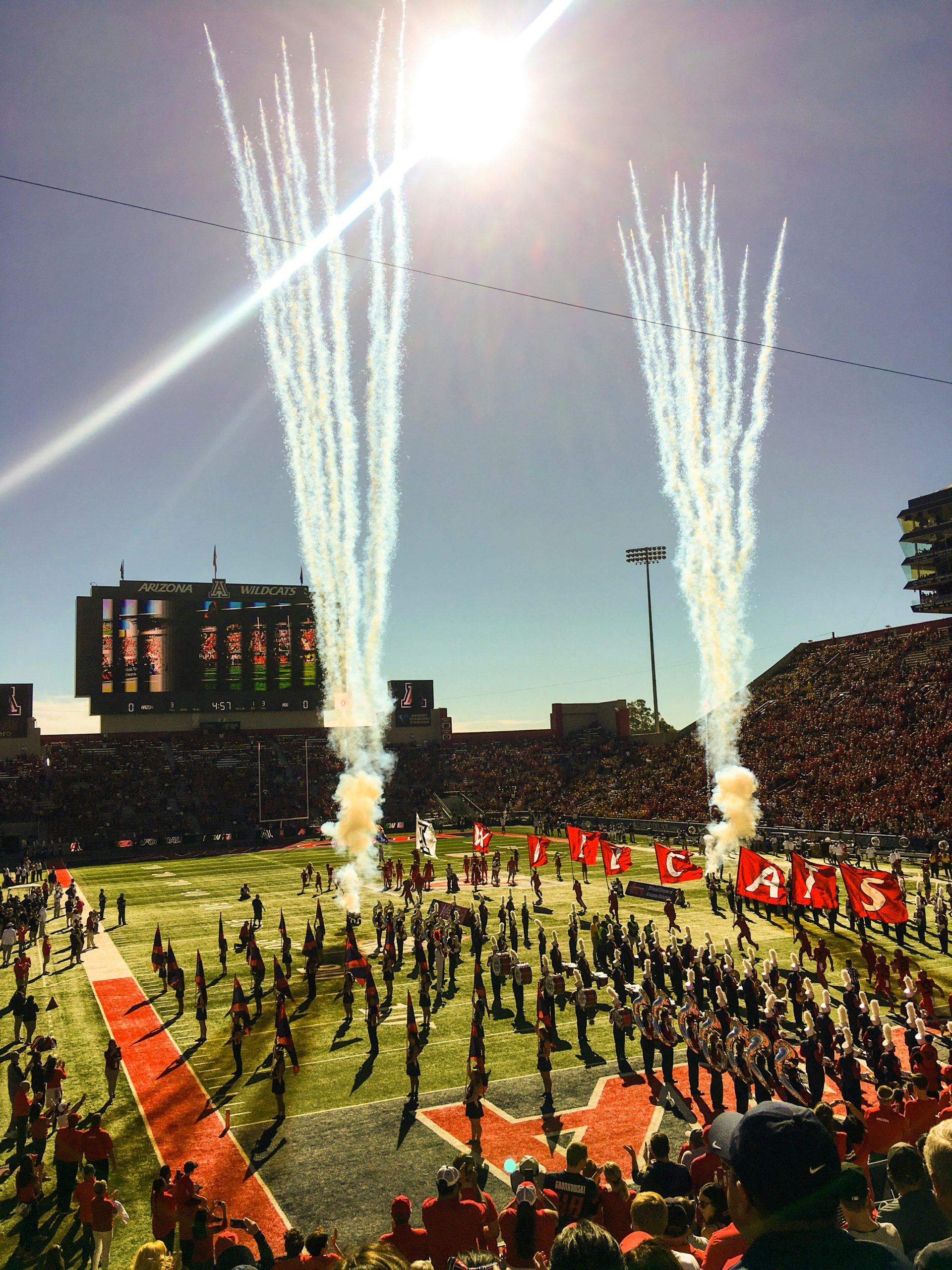
When I moved to Canada some years back, I expected college sports to be like what I saw on social media and ESPN — March Madness and NCAA football — but I was in for a big surprise. It’s not even half of that. Why, despite the fact that Canadian and American sports cultures are similar, is the gap between the NCAA and U SPORTS like Kevin Hart and Dwayne “The Rock” Johnson? I will dive deep into the differences I saw when I went to two games: a Wisconsin Badgers football game and a basketball game.
The number one key difference is investment. NCAA Division I schools spend over $17 billion on sports alone — that’s more than the GDP of Micronesia, Tonga, Samoa, and other Pacific islands combined. Meanwhile, Canada spends a tiny fraction of that.
In the case of the two schools I’m comparing, the University of Wisconsin spends about $140 million annually on sports. York’s number isn’t publicly known, but it is definitely not spending as much as University of Wisconsin
Camp Randall Stadium, home of the Wisconsin Badgers, has a capacity of about 75,000 — more than Old Trafford in Manchester, the home of England’s biggest club, Manchester United. Camp Randall would be the fifth-largest NFL stadium if it housed an NFL team. York Lions Stadium, on the other hand, has a capacity of about 4,000 according to Ontario soccer. If Camp Randall were in Canada, it would be the biggest stadium in the country, surpassing Canada’s largest — the Commonwealth Stadium — by about 20,000 seats.
The Wisconsin Badgers basketball arena, the Kohl Center, looks like an NBA arena. Tait McKenzie…well, it’s a gym that happens to host Varsity games. Enough said.
This comparison is not meant to throw dirt on York’s athletic program, nor is it intended as a judgment of quality or effort. In many ways, it is not even a fair comparison. American universities operate in a vastly different context — with larger populations, more commercialized sports systems, and significantly more revenue streams tied to college athletics.
The purpose of this comparison is simply to highlight the difference in how central college sports are within the American university culture compared to Canada. Even in sports like hockey, which are traditionally associated with Canada, U.S. colleges often invest more heavily and build more visible campus cultures around their teams.
Because of this funding, the NCAA gets far more attention — not just in the U.S. and Canada, but globally — and they are able to produce international superstars.
Using these two schools as examples, Wisconsin alumni include J.J. and T.J. Watt, Russell Wilson, and Jonathan Taylor — all of whom have been top five at their position in the NFL at some point. They’ve also produced an NBA All-Star in Michael Finley.
York has notable alumni too — Olympic silver medalists like Melissa Paredes and Brandie Wilkerson — but the pedigree is simply not close to that of Wisconsin. And to be fair, York treats their athletes like students who play sports, while Wisconsin and other American schools treat athletes like athletes who happen to be students.
I’ve been to about five NBA games, but the college game day experience in Wisconsin was better than about 80% of them. The experience was electric. People come from all over the state, and there are so many traditions — like going to the Nitty Gritty Bar after the game. The Badgers don’t play just for the school; they play for the whole state of Wisconsin.
You see Badgers flags everywhere — shops, houses, bars. People wear the merch proudly. There’s even a hot sauce with Bucky the Badger on it.
Yeo the Lion exists only inside York University. Once you step off campus, Yeo doesn’t exist.
If Canadian college sports want to grow beyond campus, the first step isn’t copying the NCAA — it’s visibility. Right now, many Canadians don’t even know when their local university teams are playing, let alone who the athletes are. More national broadcasts on CBC or TSN, better promotion of OUA TV, and more intentional storytelling around players would go a long way in making university sports feel public instead of private.
Culture doesn’t appear on its own — it’s built through repetition, access, and shared attention.
So the real question isn’t whether Canada can ever match the NCAA. It probably can’t, and it doesn’t need to. The question is whether Canadian college sports want to be more than a campus activity — whether they want to be something people build their weekends around, grow up watching, and pass down as part of their identity.
Until that changes, the gap between York and Wisconsin won’t just be about money or stadiums.
It will be about meaning.