

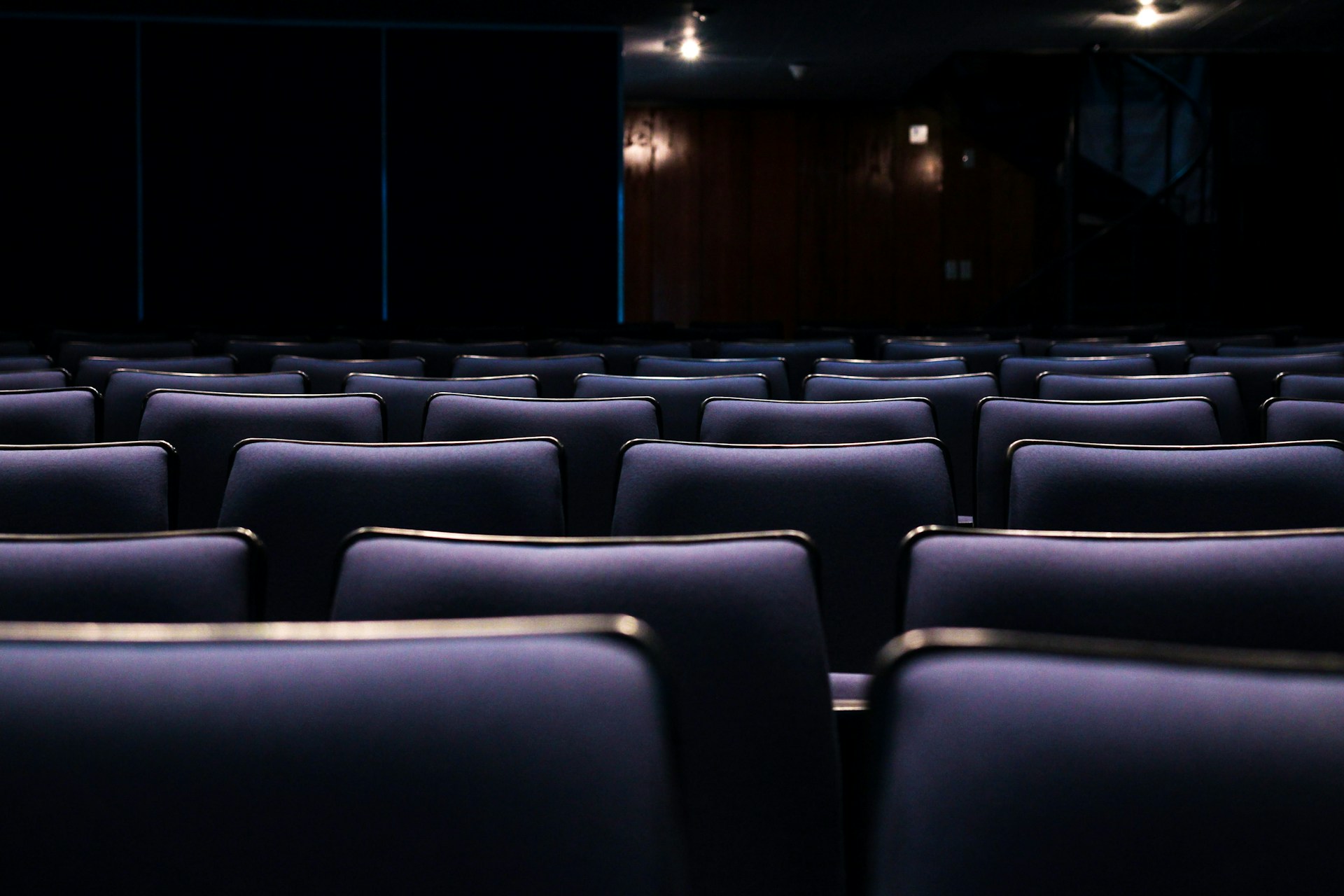
At the corner of King and John, the Lightbox stands as a cinema and showroom with multiple screens, restaurants, and a gift shop offering branded tokens of cinephilia. From hopping between Yorkville hotels, TIFF has since matured, or at least expanded, into an institution whose cultural ambitions now coexist with Studio Ghibli plush toys and A24 socks. The Bell name has disappeared from its façade. Patronage hasn’t. Year-round, TIFF programs retrospectives and premieres alike, including the limited theatrical runs Netflix affords its films before they appear on the platform that paid for them.
Certain words cling to institutions like donor plaques. At TIFF, it’s “indelible.” The word surfaces when emotion and tax receipts coincide. “Did you know TIFF is a charity?” is literal branding. The festival is renowned as one of the largest public film events. The first day of ticket access begins at fifteen thousand dollars, a kind of public in the same way yachts are boats. At the Lightbox, films don’t sell out — they go “off-sale,” a euphemism suggesting tickets might reappear at any moment in a miracle engineered by Ticketmaster. The phrase produces a particular patron: the watchful, anxious, perpetual refresher. I have spent the last three festivals in the accreditation office printing the plastic passes meant to relieve this anxiety. The reward is one free ticket per film until the end of the year, which I felt obligated to put to use.
The third floor of the Lightbox was recently renovated into a café-bar named after filmmaker Agnès Varda, designed in a style gesturing toward Art Deco via Midnight in Paris. At our university, in the restrooms, there are motivational posters with quotations pulled from Bartlett’s. Have you seen the one attributed to Mark Twain? It features an illustration of Varda peering in from the edge of the frame. The juxtaposition is either a bold cross-century collaboration or someone in facilities mistook a French filmmaker for an American humourist. Varda has become cultural décor, equally at home beside an espresso machine or above a urinal.
Cinematheque, or really all of TIFF, is offered as a public program yet functions more as a members’ club with cultural branding ambitions, replacing velvet ropes with emojis in email newsletters. There is a curated year-round schedule, which, in practice, is an evening that depends less on the film than on who is speaking before it. Andréa-Tavie Picard is an exception; her introductions are brief, precise, merciful — a stark contrast to those who deliver discursive preambles to already-long films before screenings that flirt with technical failure, where a successful reel change hinges on the sustained attention of whoever’s up in the booth. The ideal projectionist is a quiet vanguard, present only in the negative space of a seamless evening, someone whose best work is indistinguishable from nothing happening at all.
The first film I chose with the staff card was a 35mm screening of Frankenstein, a format announced at the point of sale, along with a surcharge. Prestige is billed as a surprise. The ticket agent applied a member discount, which, in the case of 35mm, meant the staff pass was financially indistinguishable from a member’s pass. The screening itself was punishing. Guillermo del Toro, a noted formalist, had timed the reel changes to narrative transitions, but the projectionist mistimed them. The sound lurched to chipmunk pitch, the image cut to black, as if the douser had closed. At one point, a ponytail passed through the beam.
Seemingly on a Netflix binge, I attended a digital screening of Kathryn Bigelow’s the following day. A House of Dynamite screened as a digital file which played seamlessly like an advertisement for America’s version of the Iron Dome, recently rebranded the Golden Dome. I left unexpectedly energized. Determined to use the pass properly, I went to Die My Love with a friend from class. This is a film I would advise against seeing if you or your companion lives with bipolar disorder; abstaining should spare you from a post-film breakdown by the constellation of flashing bulbs lining the arrow to the Mirvish underground parking.
I nearly swore off TIFF again, but the film I had most wanted to see during the festival had been released. I had liked Joachim Trier’s previous work, which I once watched during the tail end of COVID on a borrowed laptop, seated on the floor of my ex’s friend’s apartment (and arriving late, mercifully missing the vegan Panago). Whether it was the circumstances or the film itself, his Norwegian treatment of infidelity lingered. I got a ticket to Sentimental Value on its opening night of the festival, then transferred it to my ex instead. The auto-generated subject line read: You’ve got tickets to Sentimental Value.
I went alone at the end of November, using the complimentary pass and carrying a bottle of wine I had bought from the LCBO. I arrived almost an hour early and sat in the empty theatre with a dark screen. A friend called to say she had ordered GLP-1 from China. By the time the title card appeared, the bottle was more than halfway gone. I left midway through, just before the archival testimony, sensing an emotional apex. The pass had succeeded in getting me there. The rest, I decided, could remain unredeemed.
