

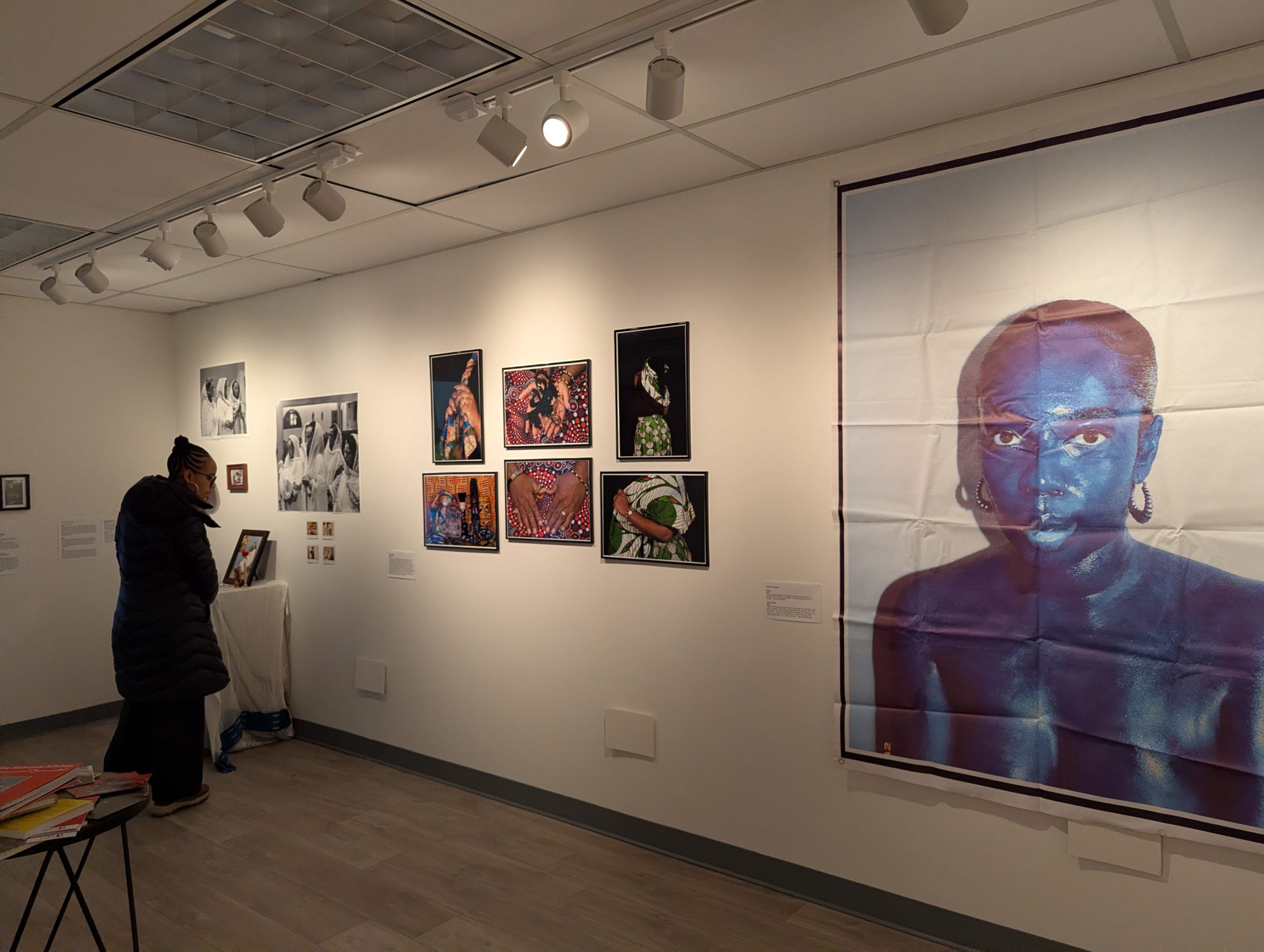
The Harriet Tubman Institute at York University is celebrating Black History Month with an art exhibit exploring the theme of migration through firsthand and intergenerational lenses. On Feb. 5, the Institute held an opening ceremony which included a gallery tour and an artist panel discussion. Curated by Professor Muna-Ubdi A. Ali, Yasmine Espert, and undergraduate research assistants, Poetics/Politics of Migration highlights the stories of several York students and artists of African heritage.
Bianca Beauchemin and Damilola Adebayo, the Institute’s current co-directors, discussed the importance of highlighting Black experiences in Canada — especially the diasporic and migratory experiences that commonly tie together people of African heritage. The artists featured in Poetics/Politics of Migration are primarily Canada-born, but they carried with them stories of repeated displacement as children and grandchildren of African and Caribbean immigrants to Canada.
Mosa McNeilly, a first year PhD student, opened the event with drumming accompanied by songs about migration in the Yoruba language. As a Canadian-born artist of Grenadian, Romani, Jewish, and Celtic ethnicity, McNeilly has made an effort to connect more deeply with her African heritage through multi-media art, photography, music, and storytelling. Her work in the exhibit engages with the tale of the Orisha, the deity associated with the sea in the Yoruba religion. McNeilly’s second piece imagines a clown who makes the decision to jump off a transatlantic slave trade ship during the Middle Passage, when millions of African people were enslaved and forcibly moved to the Americas by sea.
“I’ve often wrestled with this impulse to move,” McNeilly remarked during the artist panel. “I think of it as an ancestral impulse from that Middle Passage history…I wasn’t born on the continent, and neither were either of my parents, but I always had this deep yearning to connect to my African roots.”
McNeilly explained how every part of her lineage contains an element of migration, whether through forced displacement as with her Jewish and African history, or through a diaspora as with her Caribbean and Canadian roots, or because of her Romanian heritage.
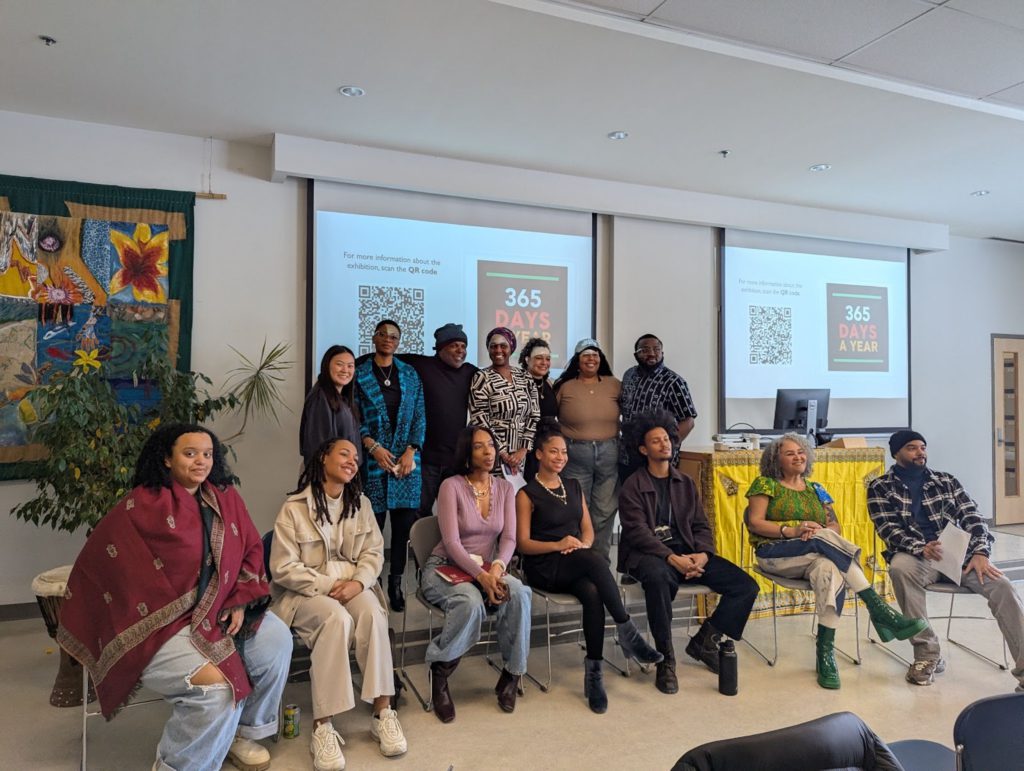
Other aspects of the event included a self-guided tour and catering from Afrolicious, followed by an artist panel discussion led by Aaron Joseph. The exhibit includes an audio-visual film reel created by Sytra Mohammed, comprised of childhood videos of her older sister and her father, that plays on loop, and visual and physical elements from the other artists. One of the physical elements included Moko Jumbies (Caribbean carnival stilts), which examine the role of photographs and archival memorabilia in the stories that pass between generations and across different continents.
Politics/Poetics of Migration is available to view at the Crossroads Gallery & Zig Zag Gallery (HNES) for free. The exhibit is split into two floors, with the upper available by appointment only. As part of the Politics/Poetics of Migration series, The Harriet Tubman Institute will also be having several other events and talks throughout February. Learn more here.
